A Beginner's Guide to Scandinavian Design

Scandinavian design, 'scandi' for short, will always have a place in the mountains. Like many other design styles from northern latitudes, this style works because it knows how to use light. That being said, the level of craft and detailing that takes your home from Ikea-esque to the next level can be hard to attain. It takes very talented carpenters. This severe minimalist style leaves no place for bad joinery to hide. And that is why it can be so hard to pull off, depending on the level of craftspeople available in the mountains.
As Ludwig Mies van der Rohe said, 'God is in the details'. From working in high-end residential architecture, rest assured that design that looks the simplest is often the hardest to pull off. For example, baseboards and ceiling trim exist to cover the messiness of what happens when a floor meets a wall or the wall meets the ceiling. Design at this level takes a much higher level of forethought and also drawings.
Scandinavian design at its height is flawless, considered, and perfectly executed. Even with this level of precision, there is still a human scale and a warmth to each space. For historical reference, explore Alvar Aalto's work.

Alvar Aalto's personal residence, above, features warm materials combined with detailing around large windows and white walls used to bounce light. The brick wall opposite the windows gives a human scale and, in using a more natural material, keeps the space cozy. The precise opening and subtle level change beyond demarcates a different room designed for a different use. In this case, the studio. The clerestory windows in the far room allow for another solar orientation to help create flow between the spaces and make the best use of light.
Even in Aalto's more civic work, like the Säynätsalo Town Hall or the Vyborg Library, the use of natural materials and light creates spaces that are human scale, despite the fact that they are gathering spaces for many. A key feature of his designs is to place gathering spaces and circulation close to windows and then use different transparencies on the interior to guide light in.
A more modern touchpoint, is Snøhetta. This aesthetic is a bit more stark and severe, and perhaps a bit more what most people think of when they think of 'scandi'. They have pioneered the idea of architecture as landscape and are known for their large-scale civic projects, becoming places to walk, as in the Norwegian National Opera and Ballet pictured below. They also use glass to create interesting transparencies within a space. In this case, the glass seen below allows light to stream into the atrium, taking a cue from Aalto perhaps, in having the circulation and gathering spaces bathed in light.
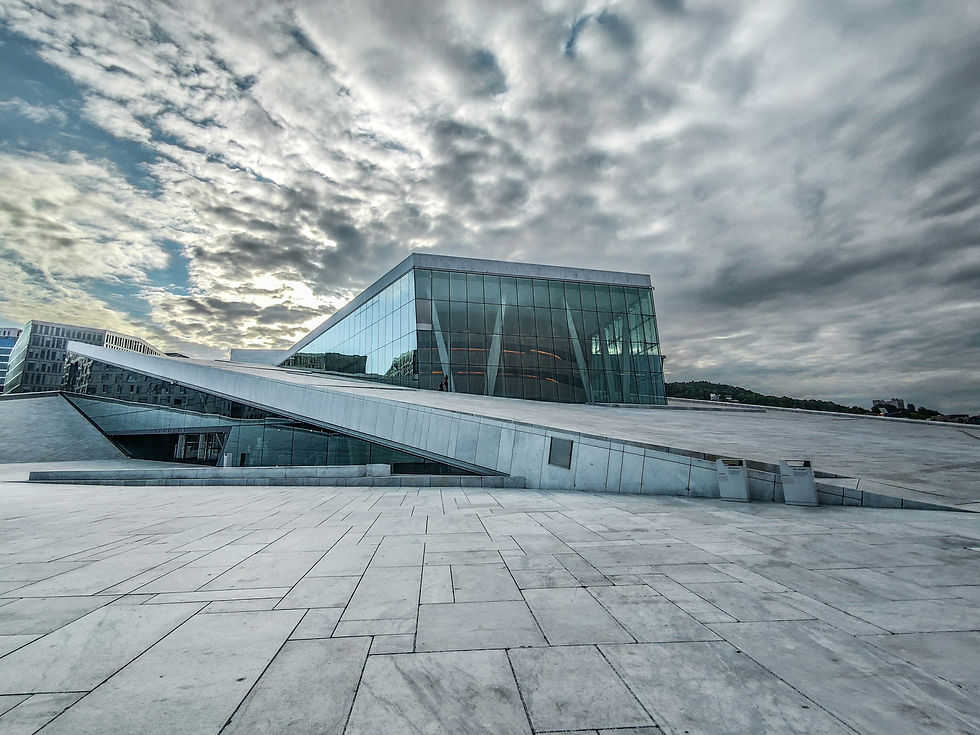
Inside the atrium is an oak vessel of sorts that contains the auditorium, creating a sharp contrast between the light-filled space of gathering and the dark space of performance. The auditorium then allows for the focus to be on the performance.
A smaller-scale project by them is the Norwegian Wild Reindeer Pavilion. This features curved CNC-milled wood areas outside for visitors to bask in the sun, and is echoed on the interior. This natural material being manipulated into sensuous curves, cocoons visitors in a harsh and stark landscape, offering a feeling of safety and security against the elements. The box containing the wood structures is a modern feat of glass allow for amazing views to the exterior, and on the exterior this glass reflects the incredible scenery.
If you are intrigued by Scandinavian Design, explore these architects as places of reference. The modern idea of 'scandi' pulls from a long and beautiful history of using light and natural materials to create warmth and contrast from the elements outside. As always, vernacular homes can also offer great reference points, so check out some historic homes, as shown below, from these locations as well.


Comments